Science of the Pour: Prepping Epoxy for Trenchless Pipe Repair
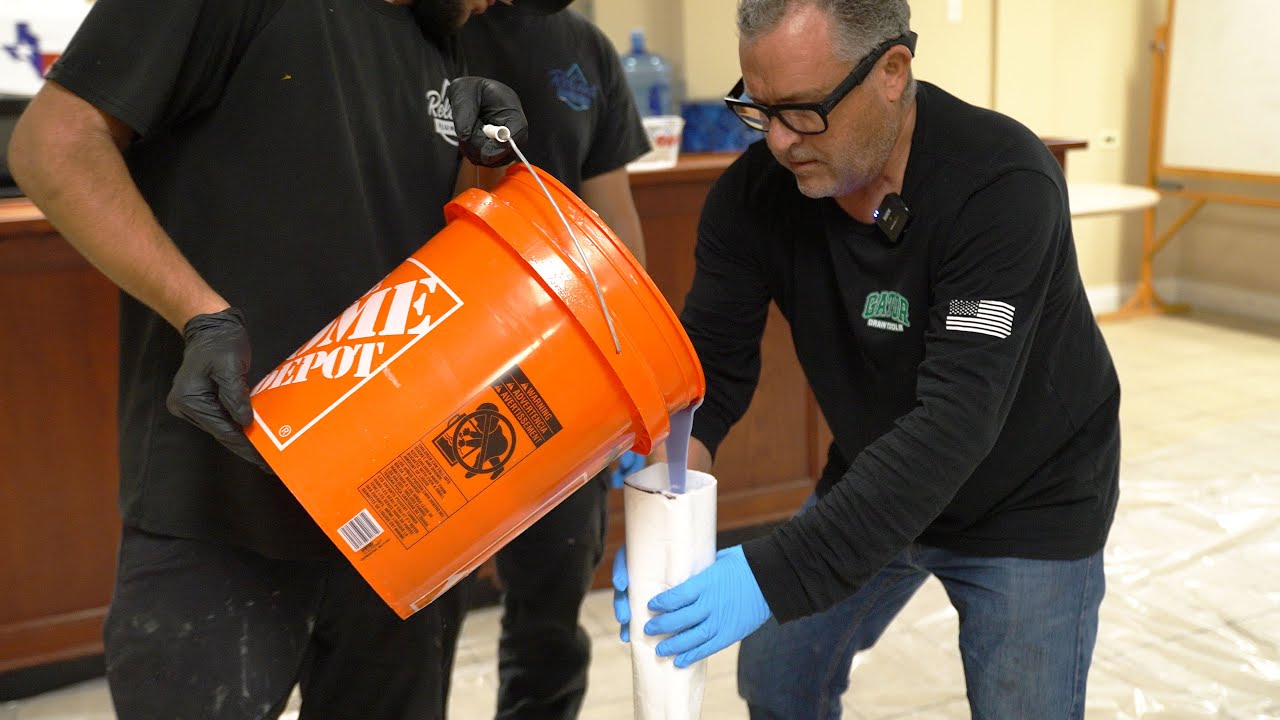
A trenchless sewer repair lives or dies in the bucket. Before a liner ever goes into the ground, our crew has to mix and handle the epoxy so it hardens inside the pipe - not on the job site. In this video, our team shows how they prep the resin and why temperature controls almost every decision they make.
If you’re new to the process, start with our overview of trenchless pipe repair. This page zooms in on one step most homeowners never see.
Why Epoxy Temperature Matters in Trenchless Pipe Repair
The epoxy we use for epoxy pipe lining comes in two parts: a base resin and a hardener. Once they’re mixed, the chemical reaction starts and the epoxy begins to warm up on its own. The warmer it starts, the faster it “kicks,” or begins to set.
That gives the crew a short working window. The liner has to be saturated, loaded, inverted into the pipe, and inflated against the pipe walls before the epoxy sets. If the resin cures early, the liner can harden before it’s pressed into place.
The 70-Degree Starting Point
Starting a mix at around 70 degrees is ideal. It gives the crew enough time to work without rushing.
The 90-Degree Rule
If the epoxy hits 90 degrees before it goes into the sewer line, it can climb to 100 degrees during installation. At that point it may harden before the liner is aired up. That’s a failed liner, and on a Texas summer afternoon, it can happen fast.
How Our Crew Preps the Epoxy
- Keep the components cool. Resin and hardener stay out of direct sun and away from hot truck beds until it’s time to mix.
- Weigh every batch. The ratio of base resin to hardener has to be right. We measure by weight, not by eye.
- Shake the hardener thoroughly. A well-mixed hardener means an even cure from one end of the liner to the other.
- Pour carefully. The Part A base resin is thick, about like molasses. Slow, steady pours keep it in the bucket and off the work area.
- Clean as we go. Uncured epoxy gets everywhere if you let it. The crew wipes down tools, gloves, and surfaces after every pour.
Why We Prep the Night Before and Install at Sunrise
In Central Texas, the hours that matter most are early morning. Our crews often prep the liner the evening before, then install first thing the next day while it’s still cool. That keeps the epoxy in its working range and gets the liner in the ground before afternoon heat becomes a problem.
It also means less time with your sewer line out of service. You get a repair that’s done in a day, not a week.
How Long Does Epoxy Take to Cure in a Pipe Liner?
Cure time depends on temperature, the epoxy system, and the size of the pipe. On the job in this video, the epoxy needed about seven hours to fully cure. When the schedule allows, our crew leaves the liner in place overnight for maximum strength.
Once it’s cured, the bladder comes out and the liner stays behind as a smooth, jointless “pipe within a pipe.” Then we run a camera through the line to confirm the repair.
Where Epoxy Prep Fits in the Full Trenchless Process
- Camera inspection - We map the line and find the damage. Learn about our sewer camera inspections.
- Cleaning - Hydro jetting and descaling strip out roots, scale, and buildup so the epoxy can bond.
- Filling the voids - On older cast iron with large holes, we sometimes fill gaps before lining. See why we drop marbles down a sewer line.
- Epoxy prep - The step in this video.
- Installation and cure - The liner is inverted into the pipe, inflated, and left to harden. Follow a full liner install in downtown San Antonio.
- Final inspection - One more camera run to confirm a smooth, sealed line.
Mastering the Epoxy Process: Quick Takeaways
- Temperature sensitivity: Resin stays cool to keep it from curing during midday heat.
- The 90-degree rule: Epoxy that reaches 90 degrees before install risks hardening before the liner is inflated.
- Viscosity: The thick resin needs careful pours and constant cleanup.
- Cure time: About seven hours on this job, with an overnight cure preferred for maximum strength.
- Timing: Prepping the evening before allows a quick morning install before temperatures rise.
Frequently Asked Questions
What happens if the epoxy cures before the liner is in place?
The liner can harden before it’s pressed against the pipe walls, which means the repair won’t hold the way it should. That’s why our crew controls temperature from the moment the epoxy is mixed.
Does hot weather affect trenchless pipe repair?
Yes. Heat speeds up the epoxy reaction and shortens the working window. In Texas summers, we schedule installs for early morning to stay ahead of it.
How long does an epoxy pipe liner last?
A properly installed liner creates a durable, corrosion-resistant pipe inside your old one. Read why homeowners are choosing trenchless repair.
Is my sewer line a good candidate for lining?
Lining works best on pipes that are cracked, corroded, or have root intrusion but haven’t collapsed. A camera inspection is the only way to know for sure.
Thinking About Trenchless Repair?
Reliant Plumbing has served Texas homeowners since 2014, with trenchless crews across Austin, San Antonio, Waco, and Dallas-Fort Worth. Book a camera inspection or learn more about our trenchless sewer line repair.